
Honoring longtime IRE member and mentor Susan Carroll
By Lise Olsen, The Texas Observer
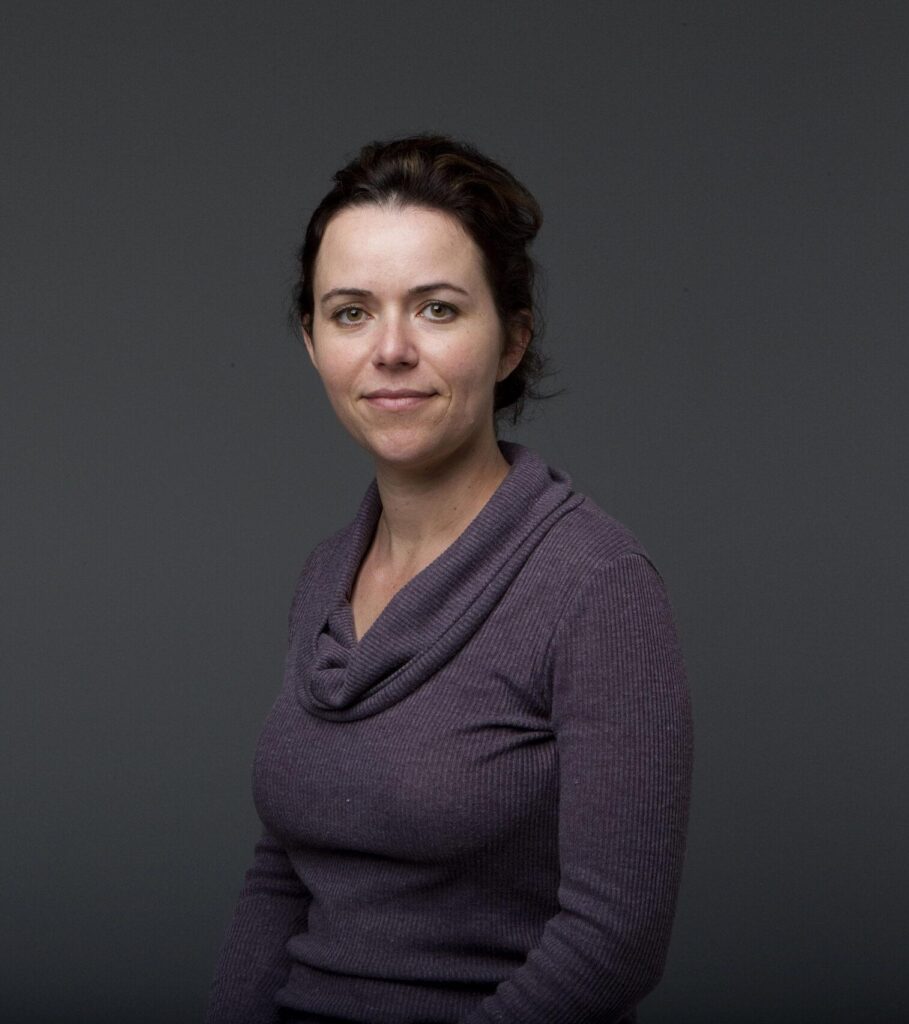
As a monster storm approached in August 2017, my friend Susan Carroll arranged for others to care for her young children in order to camp out in the Houston Chronicle newsroom along busy Loop 610. She stayed there awaiting the arrival of Hurricane Harvey, a catastrophic storm that would soon swamp the Bayou City, creating mounds of rubble and pools of high water and making many streets impassable.
As a member of the investigative team, she had no obligation to do this demanding and hazardous duty – she could have stayed home with her boys and pondered deeper dives into longer-term stories. But Susan never refused a tough assignment. As 49” of rain fell, Susan never faltered in her pursuit of probing and comprehensive hurricane news coverage that was later named a finalist for the Pulitzer Prize.
After the storm, she didn’t relax. She gathered every document and conducted probing interviews about tough decisions Houston leaders made behind the scenes during Hurricane Harvey as part of “Developing Storm,” our 7-part investigative series about what went wrong. Some of the worst post-Harvey flooding was man-made – related to dam releases and a previously unpublicized reservoir footprint that engulfed entire subdivisions. I remember her sitting in the cubicle beside me, hunched over her computer with intense focus as she completed a brilliant narrative, “Nature ruled, man reacted. Hurricane Harvey was Houston’s reckoning.” Her piece was filled with action-packed scenes and previously unknown details that would have made an excellent film script.
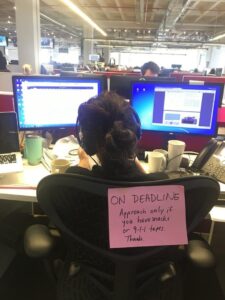
Our colleague Jill Karnicki snapped a photo that perfectly captured her intensity. That day, Susan, wearing a pair of enormous noise-cancelling headphones, stuck a funny — yet serious — handwritten sign on the back of her chair reading: "ON DEADLINE; Approach only if you have snacks or 9-1-1 tapes.”
The sign was necessary since it was rare for Susan to ignore anyone who visited her desk for advice. But it was totally in character for her to recast a bid for privacy into a joke.
I’m sorry to tell you that Susan Carroll can no longer mentor, lead, edit or amuse others now — we lost this beloved friend and dedicated Investigative Reporters and Editors member in May 2024. But I’m glad to report the creation of an IRE fellowship named in her honor to help other journalists who cover the border and immigration as she once did.
Susan died at only 46, but she’d already made a huge mark on the world of investigative journalism in her storied career at the Tucson Citizen and Arizona Republic, the Houston Chronicle, ProPublica and NBC News.
She often dived into topics that many other reporters fear to touch. She wrote about parents who accidentally kill their own children while backing up cars — a series that prompted a change in federal rules requiring backup cameras. And she investigated the plight of unaccompanied minors who’d been abused in migrant shelters at a time when no other reporters were paying much attention to the issue of children arriving alone.
Susan’s journalism career took off soon after her 1999 graduation from the University of Arizona’s J-school. She started covering night cops for the Tucson Citizen as a nose stud-wearing intern, where she met cynical veteran Blake Morlock, who informed her: "It's your job to buy me Cokes."
“Susan Carroll got the joke right away,” Morlock wrote in a remembrance. “She knew I was funning around and more to the point, happened to have the necessary 50 cents on her. A cheap price to pay to appease the guy who would be sitting across from her that week.”
She became a Citizen staff writer in 1999 and Morlock’s “podmate” and buddy. Initially, Susan covered education, and then the border — just down the road in Nogales. It was a fabulous fit: Susan was bilingual (her beloved mom, Mimi, has Cuban roots), driven and absolutely fearless. Any editor, mindless bureaucrat or clueless cop who mistook her petite size, youth and prettiness for weaknesses was doomed.
Susan charmed sources and gained friends through her considerable skills, and her love of a joke — often accompanied by a donkey-like heehaw and snorts that invariably inspired others to laugh, too. She kept new-found friends through her loyalty and compassion.
Morlock recalls how, as a young reporter, she kept vigil at the bedside of a friend who died from leukemia and offered comfort (and sometimes surprisingly wise counsel) to him, a fellow reporter years her senior. For him, Susan was a real friend.
“Real friendships have it all,” Morlock wrote. “Laughter, tears, anger, intimacy, support, kindness, and something utterly lacking in today's online companionship: Silence. Just being able to sit in one another's company and watch the traffic go by. That's the intimacy. That's the good stuff.”
She soon moved up to the Arizona Republic, and quickly returned to the border. At 25, the Arizona Press Club named her the state’s journalist of the year. Susan won for a portfolio that included stories about how immigrants seeking the American dream too often perish in the desert. Tom Oliphant, a judge and Boston Globe columnist, wrote that her “combination of original detail, depth, explanation, sensitivity, and follow-up was magnificent. Her writing was a classic combination of passion and responsibility.”
I learned of Susan’s work while organizing IRE’s bilingual border workshops, which helped connect journalists in Mexico’s border states with U.S. reporters like Susan so we could learn from each other. That work in the 2000s was an extension of IRE’s Mexico Project, which I led from 1996-98.
As an Arizonan, Susan knew the story of how IRE members came together in the aftermath of the murder of Don Bolles, a reporter in her hometown of Phoenix (really Paradise Valley) and she joined early. Up until her death, she regularly attended and presented at IRE conferences. I know how much she valued IRE and our traditions of sharing tips and stories and supporting each other.
So, it’s comforting to know that the Susan Carroll Fellowship — created through donations from her friends, family, colleagues and from the Houston Chronicle, and NBC News — will soon help other scrappy, determined border and immigration reporters attend IRE conferences in Susan’s name. Hopefully, they’ll follow in her big (though small-sized) footsteps.
Already a great writer and brilliant journalist in her 20s, Susan continued to work hard and kept getting better. In 2006, I helped recruit her to the Houston Chronicle, where she began as an immigration reporter. She later joined the Investigative Team and eventually took over as I-Team leader. Susan and her then-husband Brad Hem made their home in Texas and raised two beautiful boys, Ollie and Owen.
Hem, a former journalist, recalls how the pair initially met at the IRE Conference in Fort Worth in 2006. “I worked at IRE while I was an undergrad at Mizzou and studied under Brant Houston,” Hem said. “That’s where I got the bug for investigative reporting, but I never had the gift or dedication to it that Susy did. While I was unwinding after work, she’d be on the couch or in bed poring over documents or spreadsheets building her next story. When she got her teeth into something, Lord help the person who was going to have to answer her questions.”
In her early years at the Chronicle, she launched that incredibly ambitious project about unaccompanied minors who’d been sexually and physically assaulted in shelters run by the federal government, “Crossing Alone.” She’d internalized some of those experiences and her writing reflected a profound understanding of the pain some of these kids experienced.
As other colleagues, Lomi Kriel and Dug Begley wrote: “Susy dreamed big, laughed hard and tried to change the world for Ollie and Owen — as much as she cared about all the other children in the world who were not as fortunate.”
Susan kept on investigating through two pregnancies, breastfeeding, child-rearing, summer-camp arranging and mad dashes to her kids’ sports and school activities. It was always clear that her boys came first. As Lomi and Dug wrote in a fundraiser for their future college tuition: “Her biggest reward, however, was her two sons, both straight-A students. When she was not chasing a story or running down public records requests, you could find Susy most weekends cheering from the stands at her boys' baseball games or soccer matches.”
We bonded as working mom investigative reporters — still an IRE minority. Sometimes we disappeared together to unload or swap tips over coffee about how to avoid feeling guilty when juggling two demanding jobs, investigative reporting and motherhood.
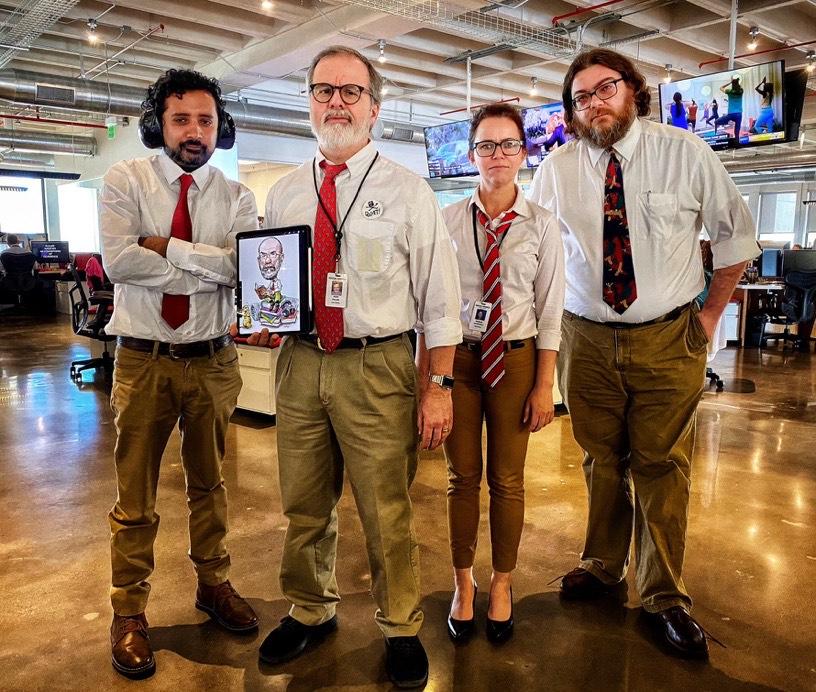
Somehow, Susan still found time for fun — and newsroom pranks. One day I found Ollie’s realistic-looking plastic rat artfully placed on my desk. Other colleagues got targeted on birthdays. She stacked Cokes all over the desk of a fellow reporter addicted to caffeine; another saw his workstation converted into a yellow taped crime scene; a third arrived just as giggling newsroom co-conspirators simultaneously hoisted coffee mugs that bore a hilarious outdated photo of her as a big-haired teen.
Susan’s beloved parents, Gene and Mimi, eventually relocated to Houston, and often backed her up when she worked weekends or nights on a big story. Though she and Brad eventually divorced they remained committed co-parents.
At the Chronicle, Susan collaborated on complex investigations about the mismanagement of Texas' $44 billion public school endowment, toxic stockpiles in Houston’s massive chemical plants and myriad topics. Along the way, she won dozens of awards, including top honors from the National Press Foundation, Investigative Reporters and Editors, and a National Headliner Award.
But she wasn’t big on bragging and rarely refused others’ requests for help. If you read her tweets, you’ll see post after post praising colleagues.
In her years as an editor at the Houston Chronicle, ProPublica, and finally at NBC News, Susan was beloved for her mentorship, leadership skills and seemingly endless reservoir of investigative story ideas. After her death, an NBC series she conceived about the use of unclaimed bodies for medical research, “Dealing the Dead,” won a George Polk Award and other honors that came with cash prizes that her colleagues contributed to this fellowship.
“This was the exact kind of story that Susy pursued throughout her career,” said reporter Mike Hixenbaugh, who worked with Susan at the Chronicle and later at NBC News. “She wanted to expose injustice, especially when that injustice is affecting people who don’t have the resources to advocate for themselves.”
I will always remember Susan Carroll as fearless. She journeyed to the meanest streets of Honduras chasing stories about immigrants, she stared down bureaucrats and demanded answers. She advocated for her children and for her colleagues. And she bravely fought her own demons.
Susan would want us to confront the difficult fact that on a dark day in 2024 she died by suicide. Her family has been open about that part of their loss.
I hope that by sharing that this fellowship is named for a great investigative journalist — and a beloved IRE member we lost to mental illness — that we, her IRE family members, might deepen our own discussions about mental health and self-care.
Susan should still be with us. She should still be hitting me up for coffee and leading IRE panels. She should still be raising her beloved boys and doing incredible work.
Instead, through this fellowship, others will be able to attend IRE conferences in her name — and hopefully aim for new heights in their own work. And if you want to support the Susan Carroll Fellowship, you still can.
As Ken Armstrong, her former ProPublica colleague wrote: “Susy Carroll was a superb journalist and just the loveliest person. This IRE fellowship is such a fine way to honor her memory. Please consider donating.”
If you or someone you know is struggling with thoughts of suicide, you can dial or text 988 and be connected to help.