
Probing the ethics of controversial brain research
By Audrey Carleton, Bruce Gil, Emily Nadal and Zachary Smith
The four of us met in a classroom in midtown Manhattan in the fall of 2021 — donning masks during the throes of the pandemic. Then final-semester graduate students at the Craig Newmark Graduate School of Journalism at the City University of New York, we were there to learn investigative health reporting skills from our professor, seasoned journalist Katherine Eban.
Eban, a special correspondent with Vanity Fair, came with a wealth of journalism experience and brought a tip for the class. Little did we know that the entire process would stretch on for three years, and eventually become a 7,000-word investigation for STAT, a news organization that covers health and medicine.
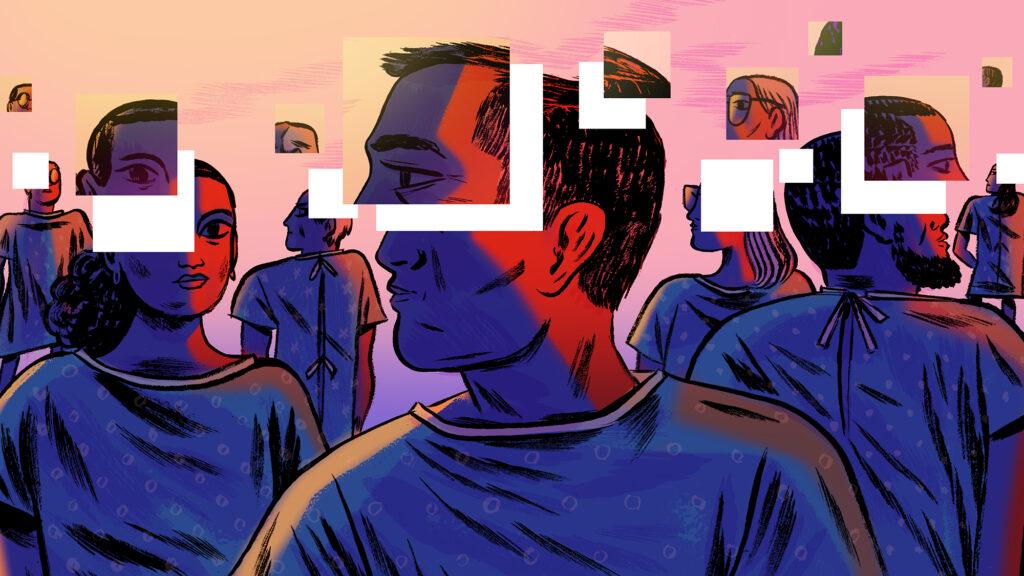
Our reporting centered around an ongoing research study at Mount Sinai Health System that had drawn the scrutiny of federal regulators. Billed as a first-of-its-kind undertaking, the Living Brain Project collected brain biopsies from patients who were undergoing deep brain stimulation (DBS), a neurosurgical treatment that inserts an electrode into the brain to ease symptoms from Parkinson’s disease and other ailments.
Mount Sinai researchers had repeatedly claimed that the biopsies resulted in the “same amount of tissue loss” and “the same level of risk” for patients as standard DBS. However, experts consulted by the U.S. Food and Drug Administration refuted that assertion, and agency reviewers concluded in an internal report that the doctors had used a “false justification” to obtain the biopsies.
We set out to determine how substantive the concerns of regulators were.
To begin the reporting process, Eban had us sign a “Rules of the Road” agreement that established how we would work as a team: with a commitment to accuracy, protecting the confidentiality of our sources and acknowledging that there might be no story at all.
Then we divided reporting areas, which included learning about medical device regulations, finding patients, studying the neurosurgical procedures involved and gaining the trust of sources inside Mount Sinai.
We would graduate mere months later, only to realize that we were nowhere close to being done. So, with the help of a grant from the Fund for Investigative Journalism and, later, another from the CUNY journalism school, we continued to meet on nights and weekends, even as we began our first post-graduate jobs.
This story did not crack open easily. It was hard for us to find patients because there was such a limited pool. And while finding neutral experts who weren’t connected to Mount Sinai was difficult enough, getting them on the record proved challenging because they feared retaliation if they spoke out. Finally, we had to fight for every study document from the federal government through Freedom of Information Act requests, and ultimately litigation. Once we obtained the documents, they were filled with complex medical jargon that required input from more experts. It took us time to determine whether the justification for the study — and the consent process for it — was misleading, as the FDA had contended.
We followed these reporting paths for over two years until we felt confident that we had uncovered a complex tale of medical ethics, one with larger implications for how our medical system regulates cutting-edge human research. (Mount Sinai vehemently denied both the reporting in the story and the FDA’s own conclusions, calling them “categorically unfounded.”)
A multi-year FOIA battle
We started one of the most critical tasks in the classroom. We composed detailed FOIA requests to state and federal agencies, which included the FDA, the Department of Health and Human Services and the National Institutes of Health.
While we filed our FOIA requests as early as possible, we ensured that we had done enough reporting to be specific in our asks. Even so, one agency responded with a request for us to be even more specific, delaying the production of those documents.
After months of little headway with the agencies, we decided to begin litigation, launching a multi-year battle for study-related documents. One of those lawsuits is still ongoing.
Six months after we filed suit, documents began to trickle in, even if many of the details were redacted. We ultimately obtained over 4,000 pages of documents, including email communications, meeting minutes, grant proposals and annual project updates that helped shed light on the inner workings of the study. For example, we learned from NIH grant documents that, despite its contested origin, the Living Brain Project had expanded to a second site, Rush University Medical Center in Chicago.
The search for experts
To ensure that we were interpreting technically complex documents and delicate patient experiences correctly, we needed to find neutral medical experts. We sought out neurosurgeons who specialized in DBS and who could assess the accuracy of the claims being made by Mount Sinai researchers. We also needed to find medical ethicists who could speak to whether the consent process was adequate.
To ensure that each expert we approached was unbiased, we assessed their previous work experience, publication records, conference presentations and committee work to screen for any connections to Mount Sinai, the Living Brain Project or its researchers.
We found a number of neutral neurosurgeons who were willing to review study documents. They helped guide us to the major crux of our story: that Mount Sinai researchers had used a false justification for the biopsies, by claiming that they did not result in any additional tissue loss than standard DBS. The FDA had initially found that claim, which was repeated in patient consent forms and other study documents, misleading. The experts who spoke with us agreed.
In addition, the neuroethicists we found questioned whether it was ethical for the surgeon performing the biopsies to also be the one to obtain consent for the research study, as that could potentially be coercive to the patient.
Finding patients
We also worked to find patients involved in the study. We spoke to community board members from the district that encompasses Mount Sinai and sought out advocates for Parkinson’s patients. But ultimately, our best leads came from Mount Sinai’s own promotional materials and Facebook, where a number of patients had posted about undergoing DBS at Mount Sinai.
Once we got patients on the phone, several offered up information about the Living Brain Project, unprompted. A number described themselves as vulnerable and struggling with either Parkinson’s disease, essential tremor, depression or Tourette syndrome.
We wanted to make sure there were no surprises for anyone we featured in the story. After spending months building rapport with the patients, we made sure to prepare them for what we were going to report and characterized for each of them what material we would be using from the interviews.
Once we were satisfied that we had a story, we approached STAT, which was willing to take a chance on our unconventional team and withstand threats from an acclaimed hospital system.
How we stuck with it
Along the way, we repeatedly returned to several practices Eban taught us.
We always worked from an investigative premise — a central question to help guide the reporting. We were hard on it, tweaked and retooled it as we gained information, but always returned to it to avoid getting lost in the weeds. We spent hours with our heads metaphorically in our hands, challenging our own premise and carefully considering whether we had enough information to support publication. Over the course of our research, our premise evolved from examining why Mount Sinai’s institutional review board approved the study to how Mount Sinai researchers had justified the study to regulators.
We also perpetually sent out queries to prospective sources, a process we called “laying out fishing baskets.” While not everyone got back to us, this deliberate approach ensured that we chased down every lead we could think of, allowed us to cast a wide net for sources, and was fundamental in achieving breakthroughs in our reporting.
We were also careful to document everything in a shared Google folder, with numerous sub-folders akin to a filing cabinet. We documented every source call, crafted detailed research memos, kept thorough source lists, and — most importantly — created a standardized, annotated and sortable timeline in a spreadsheet. This timeline allowed us to easily revisit key pieces of information we’d found months earlier, identify patterns and determine the order of events. We returned to this timeline throughout the reporting process and as we were writing the final story.
While drafting the story, we were careful not to take any liberties and only wrote exactly what we could confirm. To fact-check the story, we used a separate spreadsheet where we put each of the nearly 100 facts from the story in separate rows, all accompanied by supporting materials. We collectively reviewed the document, and updated it through publication, until we agreed each fact was verified.
What we learned from the final result
Immediately after publication, Mount Sinai launched a campaign to discredit our story, alleged “deception” and demanded alterations to, or a complete retraction of, the story. All of our diligent note-taking suddenly became a crucial defense against the hospital’s claims that we misrepresented patients’ experiences.
As our findings resonated within the neurosurgical community, not only did STAT stand by the story, it commissioned a follow-up.
Our second story, published three months later, exposed Mount Sinai’s campaign to discredit our story and stifle debate over its controversial brain research. We reported on how Mount Sinai had enlisted its own patients to disavow their quotes and sought to stop a professional society of neurosurgeons from issuing a statement that could have jeopardized the study.
Both stories continue to have an impact in the neuroscience world. Several months after our initial story, senior neurologists published an article in JAMA Neurology referencing our story and recommending changes to the consent process. And this June, our story won a science and health award from the Silurians Press Club, which honors local news coverage for the New York City Metropolitan Area.
This was the first time any of us had worked on an investigation of this magnitude, and the experience offered us an extended lesson on the challenges involved.
As students, we had imagined investigative reporting as a high-octane process fueled by dramatic breakthroughs and obvious illustrations of harm. Years later, we understand that information is hard to obtain and often not simple to interpret. But we are satisfied that our efforts to expose even the murkiest of ethical dilemmas helped to raise questions and spark change.